
Sacramento's Flat Roofing Contractor for Homes & Businesses
Roof Repair Services
White TPO Membrane Energy-Saving Flat Roof for Sacramento's Heat
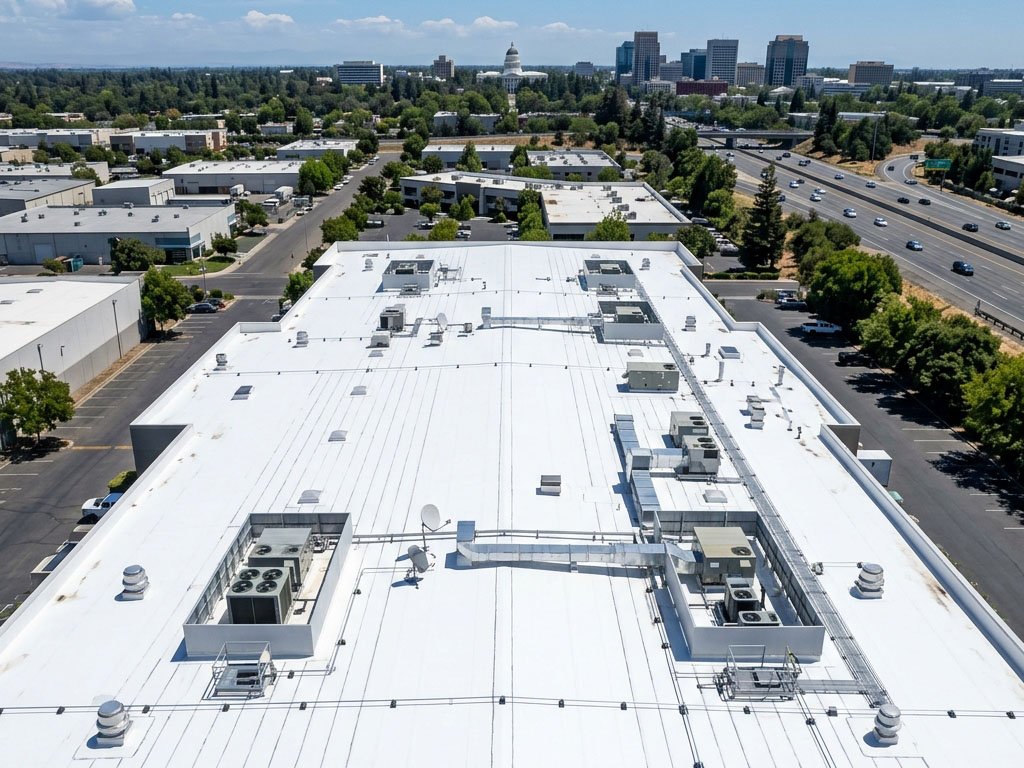
A TPO roof is a white single-layer membrane that reflects sunlight away from your building. This keeps your interior cooler and cuts your air conditioning costs during Sacramento's long, hot summers. First, we roll out and fasten a GAF EverGuard Extreme 60-mil TPO membrane across the full roof deck. This membrane is thicker than standard TPO and holds up better under foot traffic from HVAC technicians. Next, we fuse every seam using a Miller Weld-King 4000D automatic hot-air roofing welder. This machine moves along the seam at a set speed and bonds the overlapping edges into one solid, waterproof strip. Also, this white membrane meets the CALGreen Building Standards Code Section 5.106.9.1 minimum solar reflectance index requirements for nonresidential low-slope roofs. This means that your building passes California's cool roof inspection without any added coatings or upgrades.
EPDM Rubber Roof The Long-Life Option for Flat Sections
EPDM is a thick rubber membrane that stays flexible year-round. It does not crack in heat or become brittle in cold. This makes it a strong choice for residential flat garage roofs, ADU additions, and low-slope commercial sections in Sacramento. First, we spread out a large-format Firestone RubberGard EPDM 90-mil membrane across the prepared deck. The fewer seams this membrane has, the fewer chances water has to find a weak spot. Next, we bond every overlap and edge with a Johns Manville QuickSeam EPDM splice tape roller system. This pressure-activated tape creates a permanent bond without heat guns or open flames. Also, this installation follows ASTM D4637 standard specification for EPDM single-ply roofing membranes, which sets the minimum thickness, tensile strength, and elongation values for this type of roof. This means that your EPDM membrane is tested and certified to meet national performance standards before it ever ships to your job site.
PVC Membrane Built for Restaurant and Chemical-Exposure Buildings
PVC is the right choice when a roof sits directly above a commercial kitchen, a loading area, or a building that handles oils, solvents, or chemicals. Other membranes can soften or break down when grease from exhaust fans settles on the surface over time. PVC resists that damage. First, we install a Duro-Last 50-mil custom-prefabricated PVC roofing membrane cut to fit the exact shape of your building. This system is fabricated at the factory so seams on the roof are kept to a minimum. Next, we weld the remaining field seams using a Leister Varimat V2 automatic hot-air welding robot. This machine tracks the seam and keeps the bonding temperature steady so every inch of the weld is uniform. Also, this membrane installation follows Sacramento County Environmental Management Department guidelines for roofing materials used in proximity to commercial kitchen grease exhaust systems. This means that the membrane material you get is rated safe for use above food-service ventilation and will not absorb or degrade from exhaust grease over time.
Modified Bitumen Torch-Down Roof for Apartments and Mid-Rise Buildings
Modified bitumen is an asphalt-based material reinforced with rubber or plastic to make it more flexible. It works well on older apartment buildings and mid-rise properties where the roof deck needs a strong, heavy-duty cover. First, we lay down a base sheet and then apply a GAF Ruberoid Mop Smooth SBS modified bitumen base sheet with an APP granule-surfaced cap sheet over the top. This two-layer system gives the roof both a waterproof base and a tough surface cap. Next, a certified technician fuses the cap sheet to the base using a Heating International Model RS-1 propane roofing torch with an adjustable flame spreader tip. The torch melts the back of the cap sheet so it bonds tightly to the layer below. Also, all torch-applied work on this project follows California Fire Code Section 308.1.6.2 regulations for open-flame torch roofing operations on occupied or multi-story structures. This means that a fire watch is maintained on-site during all torch work and the job site is cleared of any flammable materials before heating begins.
Flat Roof Coating and Surface Restoration
If your flat roof membrane is still in good shape but has small cracks, pinholes, or faded UV protection, a full roof coating may add 10 to 15 years of life without a full tear-off. This saves money and keeps old membranes out of the landfill. First, we clean the existing surface and apply Gaco S2000 100% silicone roof coating in two thick passes across the entire roof area. Silicone does not absorb water, which means it stays bonded even when Sacramento's winter rain sits on the surface for days at a time. Next, we spray the coating using a Graco GH 200 Big Rig airless roof coating sprayer. This machine applies a consistent mil thickness across large flat areas without roller marks or thin spots that could fail under ponding water. Also, this coating product meets California Air Resources Board Regulation 8 Rule 3 VOC concentration limits for architectural roof coatings. This means that the coating we apply is certified low-emission and legal to apply in Sacramento's air basin without triggering any air quality violations.
Drainage Slope Correction and Ponding Water Fix
Flat roofs are not truly flat. They need a slight slope toward a drain or scupper to move water off the surface. When that slope is missing or settles over time, water pools on the roof for days after each rain. Standing water adds weight, softens the membrane, and shortens the roof's life. First, we design a tapered slope plan and install Rmax Thermasheath polyisocyanurate tapered insulation board panels over the existing deck. These wedge-shaped boards build the correct pitch from any point on the roof toward the drain. Next, we verify the finished slope with a Johnson Level 40-6360 self-leveling rotary laser level. This tool projects a flat laser plane across the whole roof so we can confirm the slope is consistent before any membrane goes down. Also, this drainage correction meets ASCE 7-22 Section 8.3 rain load and ponding instability design requirements for low-slope roofing systems. This means that your roof structure is calculated to handle the actual rain loads typical for Sacramento's wet season without risking a ponding collapse.
How a Flat Roof Installation Works
Free Roof Survey and Building Assessment
Our team visits your property and checks the existing roof deck, drainage points, parapet walls, and HVAC penetrations. We measure the full roof area and take photos of every condition we find. You get a clear picture of what your building needs before we quote a price.
System Selection and Material Matching
Next, we match the right membrane to your building type. A restaurant gets PVC. A warehouse gets TPO. An older apartment may get modified bitumen. We explain each option in plain terms so you can make a confident choice.
Permit Filing and Code Review
Also, we submit all permit applications to the Sacramento Building Inspection Division on your behalf. We review the job against local energy codes, drainage requirements, and fire safety rules before any material arrives on site.
Installation, Penetration Sealing, and Drain Tie-In
Our crew installs the membrane, seals every pipe boot and HVAC curb, and connects the new surface to your existing drains or scuppers. We work in sections and cover any open areas each evening so your building stays protected overnight.
Final Inspection, Walk-Through, and Warranty Documentation
Finally, we do a full roof walk with you after installation is complete. We go over every seam, edge, and drain point together. We provide your manufacturer warranty card and our written labor guarantee before we leave the job site.
Ready to build your flat roof?
Frequently Asked Questions
How do I know if my roof is leaking or if it is just condensation?
- TPO: 20 to 30 years with regular maintenance
- EPDM: 25 to 35 years, especially in shaded or low-traffic areas
- PVC: 20 to 30 years, longer in chemical-exposure environments
- Modified Bitumen: 15 to 25 years depending on surfacing type
- Coatings: 10 to 15 years when applied over a sound existing membrane
Is a flat roof a good choice for a Sacramento home?
How much does a flat roof installation cost in Sacramento?
- TPO: $5 to $9 per square foot installed
- EPDM: $5 to $8 per square foot installed
- PVC: $7 to $11 per square foot installed
- Modified Bitumen: $4 to $7 per square foot installed
- Silicone Coating: $2 to $4 per square foot applied