
Gutter & Storm-Water Drainage Integration in Sacramento, CA
Roof Repair Services
On-Site Fabricated Seamless Aluminum Gutters
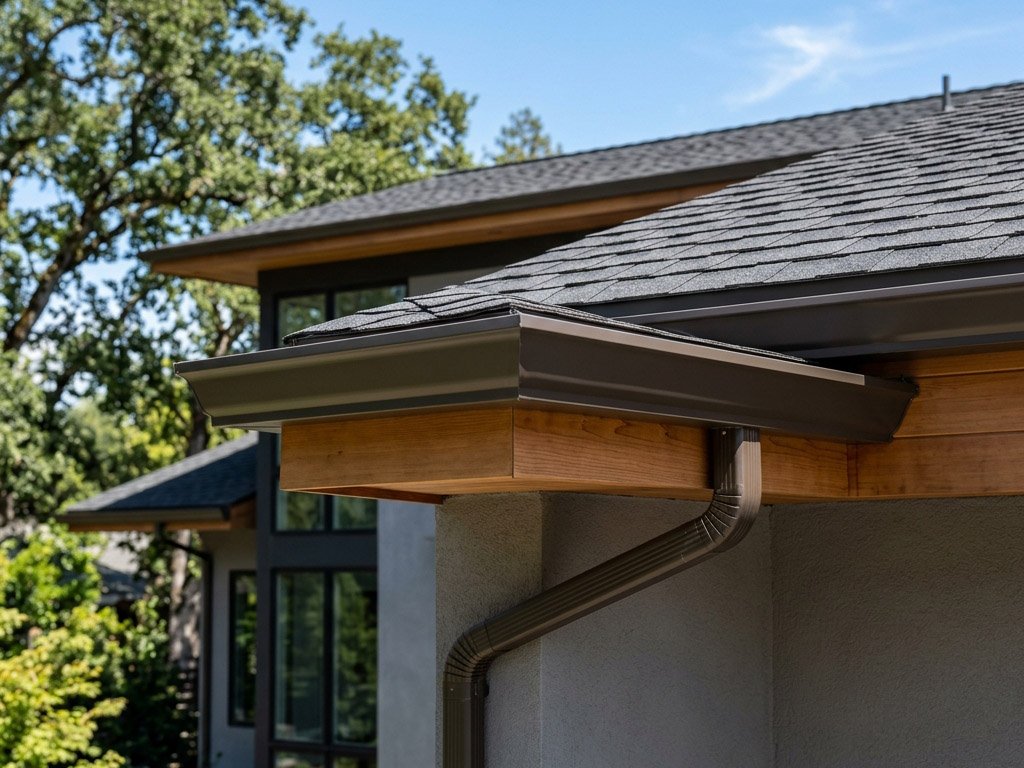
A seamless gutter has no joints along the straight runs. This means water cannot push through a seam and drip behind your fascia board. We cut and form every gutter on-site using a New Tech Machinery SSQ Multi-Pro seamless gutter machine loaded with Alsco .032-gauge painted aluminum gutter coil. This machine rolls out a single continuous channel sized to fit the exact length of your roofline. This means that no two sections need to be spliced together across a long wall. Next, we hang each run with hidden hanger brackets set at the correct slope so water flows toward the downspout without pooling. Also, this system meets the City of Sacramento Department of Public Works Stormwater Quality Design Manual Chapter 5 lot-level stormwater management standards. This means that the size and slope of your gutter system is designed to handle the volume of runoff your roof produces during Sacramento's peak rainfall events.
Micro-Mesh and Solid-Cover Gutter Guard Systems
Gutters fill with leaves, pine needles, and roof grit quickly, especially on homes under oak or pine trees. When gutters clog, water backs up and spills over the edge directly onto the foundation. This service adds a cover to your gutters so debris stays out. First, we measure and cut a Raptor stainless steel micro-mesh gutter guard panel to fit over each section of your existing gutter. The fine mesh lets rainwater drop through but blocks leaves and seeds from settling inside. Next, we lock each panel in place using a Malco S4R1 snap-lock punch to crimp the aluminum tab at the front lip of the gutter. This tool makes a clean, secure fastening point without drilling through the gutter wall. Also, this system complies with the Sacramento Regional County Sanitation District prohibition on direct roof runoff discharge into residential sanitary sewer connections. This means that your gutters stay clear and keep roof water in the correct stormwater path rather than pushing debris into the street drain or sewer clean-outs.
Copper Half-Round Gutters for Older Sacramento Homes
Older homes in Land Park, East Sacramento, and Boulevard Park often have architectural details that standard K-style aluminum gutters do not match. A copper half-round gutter is the right choice when you want a clean, period-accurate look that also functions well for decades. First, we form each run from 20-ounce tempered copper half-round gutter stock using round-style outlet tubes and matching copper downspout pipe. Copper develops a natural patina over time that protects itself from corrosion without paint or coatings. Next, we cut and fit each mitre corner with Wiss W12N straight-blade metal cutting snips to get a clean, tight angle at every turn. This tool gives us precise cuts on soft copper without cracking or warping the metal at the joint. Also, all copper gutter work on historic structures follows City of Sacramento Historic Preservation Office Guideline 4.2 for guttering materials on Landmark Structures and Contributing Buildings in designated historic districts. This means that every copper component we select and install is approved to match the original architectural period of the structure.
Downspout Disconnection and Stormwater Redirection
Many older Sacramento homes have downspouts that drain directly into the city's combined sewer line underground. During heavy rain, this adds roof water to the sewage flow and overloads the system. The city now requires homeowners to disconnect and redirect this water above ground. First, we cut the downspout free from the old sewer connection and cap the underground stub. Next, we run the flow into a NDS Pro Series 4-inch corrugated polyethylene underground drain pipe that carries water to a dry well, rain barrel, or dispersal area in the yard. This pipe is flexible, crush-resistant, and approved for below-grade residential drainage. Also, we run a post-installation check using a General Wire Spring JM-1450 drain pipe inspection camera to confirm the new pipe route is clear and seated correctly before we backfill the trench. Also, this work follows Sacramento Stormwater Quality Partnership MS4 Permit Order No. R5-2015-0036 downspout disconnection requirements for residential impervious surfaces. This means that your property is compliant with the city's permit and you will not face fines from Sacramento's stormwater quality enforcement program.
Scupper and Overflow Drain Installation for Flat-Roof Buildings
Flat commercial roofs need a drain path built into the parapet wall or roof edge. A scupper is the metal opening that lets water exit the roof surface when the interior drains cannot keep up. Without a secondary scupper, a blocked drain can cause water to pond and overload the roof structure. First, we fabricate a custom through-wall scupper box and size the outlet to match your roof area using the International Plumbing Code Section 1106.1 secondary roof drainage sizing formula adopted by Sacramento County. This calculation sets the minimum outlet size based on rainfall intensity and roof square footage. Next, we cut through the wall opening using a Greenlee 7310 hydraulic knockout punch set. This tool drives a clean circular or rectangular hole through the parapet wall without cracking the block or concrete. Also, we connect the outlet to a Zurn Z100 heavy-duty roof drain with a clamping ring and dome strainer assembly on the inside of the parapet so debris does not block the opening during heavy rain. This means that your building has both a primary interior drain and a secondary scupper working together to handle Sacramento's peak storm rainfall without overloading the roof structure.
Catch Basin and Underground Yard Drainage Integration
Some Sacramento yards collect water in low spots during winter rains. The soil stays saturated, the grass drowns, and water pools near the foundation for days. A catch basin collects the standing water at the surface and sends it underground to a drain that carries it off the property. First, we dig and set an NDS 9-inch square catch basin with an adjustable traffic-rated grate and 4-inch outlet port into the low spot of the yard. The great sits flush with the lawn surface, so it collects water as it flows downhill. Next, we trench and lay the drain pipe using a Ditch Witch RT24 walk-behind chain trencher. This machine cuts a clean, narrow trench through compacted Sacramento clay soil without tearing up the full yard. Also, the grading and drainage design follows Sacramento County Drainage Manual Section 4.3 residential lot grading and drainage design criteria. This means that the catch basin outlet pipe is sized, sloped, and directed in a way that satisfies Sacramento County's drainage review if a permit inspection is required for your property.
How the Gutter & Drainage Installation Works
On-Site Drainage Assessment
We walk your property and trace the full water path from your roof edge to the yard. We check gutter pitch, downspout locations, yard grading, and where water exits the lot. You get a written summary of what we find before any quote is issued.
System Design & Material Selection
Next, we recommend the right gutter size, guard type, and drainage route for your property. We explain the options in plain terms, no roofing jargon. You pick the system that fits your budget and your home's style.
Permit Filing if Required
Also, we check whether your project needs a permit from the Sacramento Building Inspection Division or Public Works. Jobs that connect to the city's storm drain system or require yard trenching may need approval. We handle all paperwork and coordinate inspections on your behalf.
Installation, Tie-In, and Downspout Routing
Our crew installs gutters, guards, downspouts, and any underground pipe in one organized visit. We seal all end caps and mitre joints before we leave. We also test the system by running water through it to confirm proper flow before clean-up begins.
Final Walk and Site Clean-Up
Finally, we walk the system with you and point out every connection and exit point. We haul away all old gutter material, dirt from trenching, and packaging. You get a photo report of the completed installation for your records.