
Roof Repair & Leak Detection in Sacramento, CA
Roof Repair Services
Stopping Active Roof Leaks Fast
Water inside your home needs to stop right away. This service patches the leak source before the next rain hits. First, we apply a Henry 208R fibered roof cement directly over the cracked or open area. This thick, flexible compound seals the gap and holds up in wet weather. Next, we use a DeWalt DCS367B 20V MAX cordless reciprocating saw to cut away damaged roofing material around the leak. This tool lets us remove bad sections cleanly without tearing up good areas nearby. Also, all active leak patches follow Sacramento City Code Section 104.6 emergency repair permit waiver provisions. This means that urgent fixes can begin the same day without waiting for a standard permit to clear.
Finding Hidden Leaks with Thermal Imaging
Some leaks do not show a visible stain right away. Water can travel under the roofing layers and appear in a different spot than where it entered. First, our team scans your entire roof with a FLIR E85 Advanced Thermal Imaging Camera. This device reads heat differences in the roof surface to spot wet, cold patches hiding underneath. Next, we map out every wet zone and mark each one for repair. Also, we apply a Sarnafil G410 fleece-backed single-ply membrane patch over the identified wet zones to seal them from the inside. This patch bonds tightly to the existing surface and stops moisture from spreading further. Also, this process follows ASTM E1186 standard practices for air leakage site detection in building envelopes. This means that our scan results are backed by a recognized industry testing method, which supports your insurance claim if needed.
Shingle Blow-Off and Nail Pop Repair
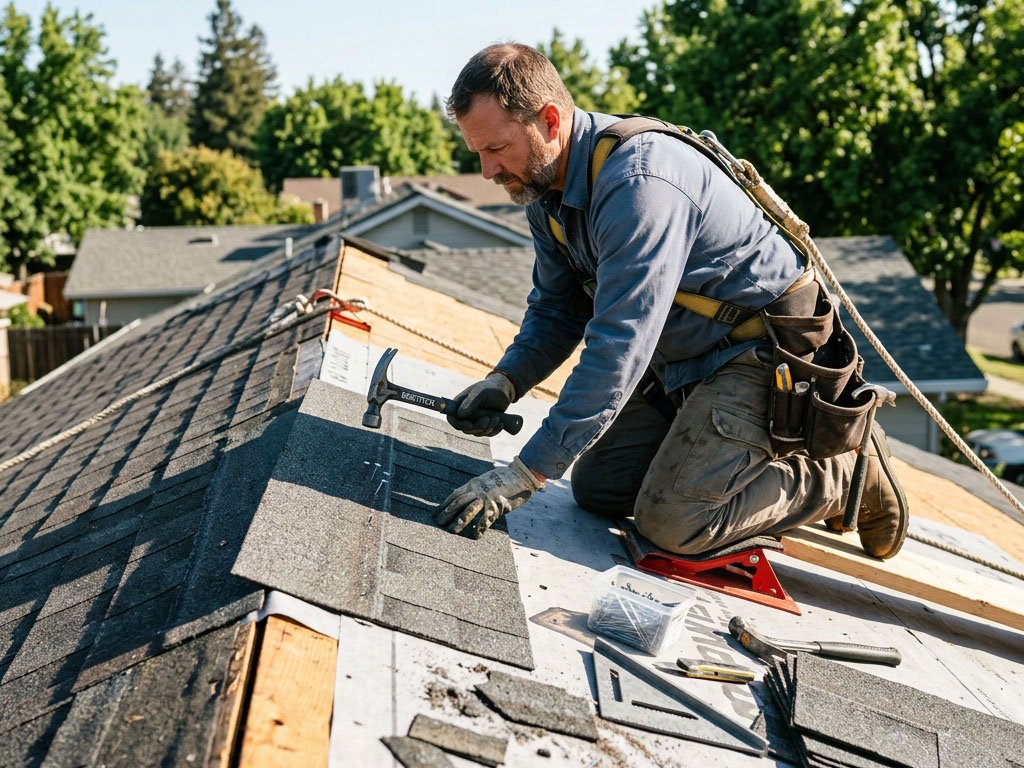
Wind can lift shingles off your roof and leave bare wood exposed to rain. This service puts the roof cover back in place before decay sets in. First, we nail down new IKO Dynasty impact-resistant asphalt shingles over the bare spots. These shingles are tested to hold against high winds common in Sacramento's late spring storm season. Next, we drive each fastener using a Grip-Rite GR100CI pneumatic cap nailer. This tool places a wide plastic cap over each nail head so the shingle does not pull free under wind load. Also, all fastener placement follows California Residential Code Section R905.2.6 nail pattern and spacing requirements for asphalt shingles. This means that every shingle we install meets the minimum code before the city inspector signs off on the repair.
Chimney, Valley, and Step Flashing Repair
Flashing is the thin metal strip that seals the joint between your roof and a wall, chimney, or valley. When flashing bends, cracks, or pulls away, water runs straight into the gap. First, we cut and fit new 16-ounce copper step flashing sheets along each joint. Copper does not rust and forms a tight seal that lasts for decades. Next, we shape each piece to the exact angle of the joint using a Malco TurboShear HD aviation-grade sheet metal shear. This tool cuts copper cleanly without warping the edge. Also, every flashing installation meets California Residential Code Section R903.2 standards for flashing material selection and installation at wall-to-roof junctions. This means that the repair holds up during both summer heat expansion and winter cold contraction without cracking the seal.
Commercial Flat Roof Seam and Blister Repair
Flat roofs on commercial buildings develop blisters, bubbles, and open seams over time. This service re-bonds the membrane and restores a watertight seal across the whole surface. First, we lay a new section of Carlisle SynTec 60-mil EPDM rubber membrane over the damaged area. This thick rubber sheet is built for Sacramento's high summer temperatures and does not crack or shrink in heat. Next, we fuse the new piece to the existing membrane using a Versiweld RG-2 hot-air roofing seam welder. This tool heats the overlapping edges to the exact bonding temperature so the seam fuses into a single waterproof layer. Also, the repaired section meets FM Global Property Loss Prevention Data Sheet 1-29 wind and water uplift standards for low-slope roofing systems. This means that your commercial property's roof is rated to handle high wind loads that are common in Sacramento's Central Valley corridor.
Storm and Wind Damage Tarp-Off and Temporary Repair
After a storm tears off shingles or splits open a section of roof, you need the opening covered fast. Water can soak your insulation, ceiling, and walls within hours. First, we nail a DuPont Tyvek HomeWrap weatherization barrier sheet over the open area as a temporary weather block. This heavy-duty wrap sheds rain while we prepare the permanent fix. Next, we drive each anchor point with a Paslode 30-Degree Cordless Framing Nailer to secure the wrap tightly without pulling through the surface. This tool works fast and does not need a compressor hose, which means we can reach any part of a steep roof quickly. Also, all temporary damage coverage follows Sacramento County Building Department Chapter 15.04 post-storm assessment and emergency stabilization protocols. This means that the tarp is installed in a way that satisfies the city inspector and keeps your insurance claim on track.
How the Repair Process Works
Free Leak Assessment
Call us and describe where you see the water. We schedule a same-day or next-day visit at no charge. Our team arrives and checks every part of your roof, not just the visible stain.
Thermal Scan and Source Mapping
Next, we run a full thermal imaging scan across the roof surface. We mark every wet zone on a photo report so you can see exactly where the leak is coming from before we touch anything.
Repair Plan and Material Selection
Also, we walk you through the repair options and material choices. We explain what needs to be fixed now and what can wait. You get a written quote with no hidden fees.
On-Site Repair and Seal
Our crew repairs the leak source, replaces any damaged shingles or flashing, and applies a weatherproof seal. We work cleanly and haul away all old material before we leave.
Post-Repair Roof Walk
Finally, we do a second check of the repaired area and surrounding zones. We take photos and give you a copy of the completed work report for your records and insurance file.